
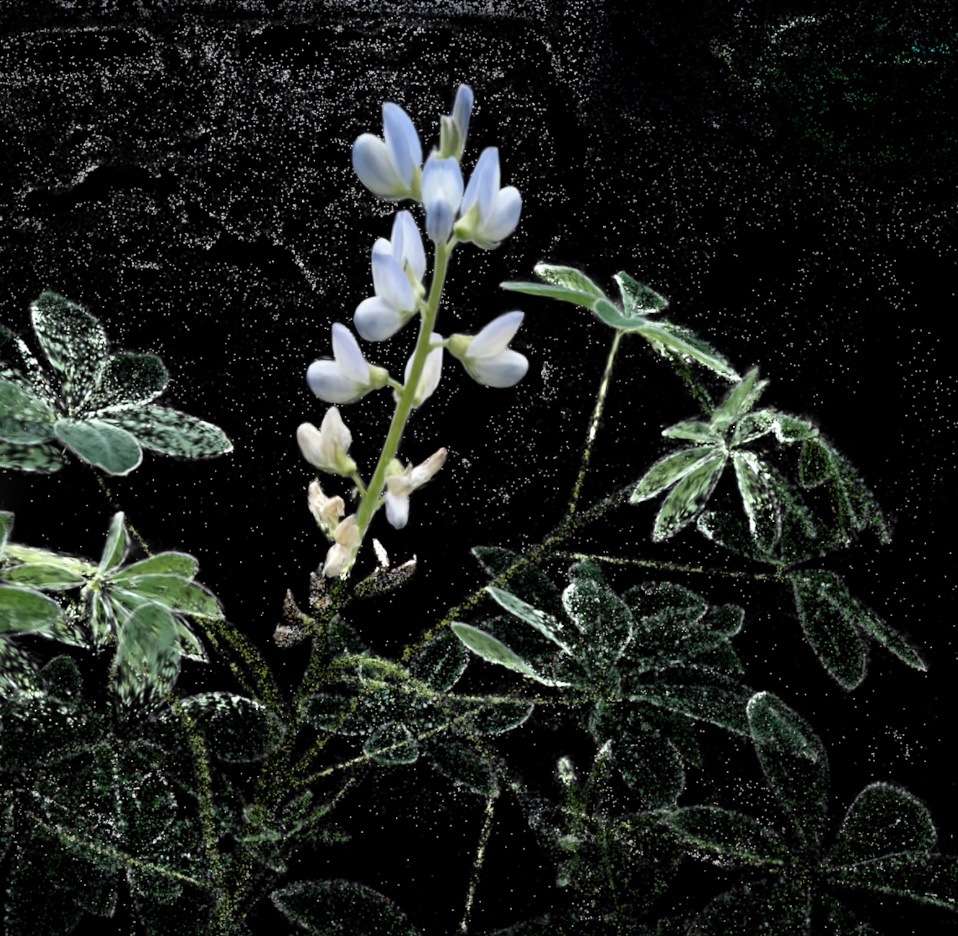
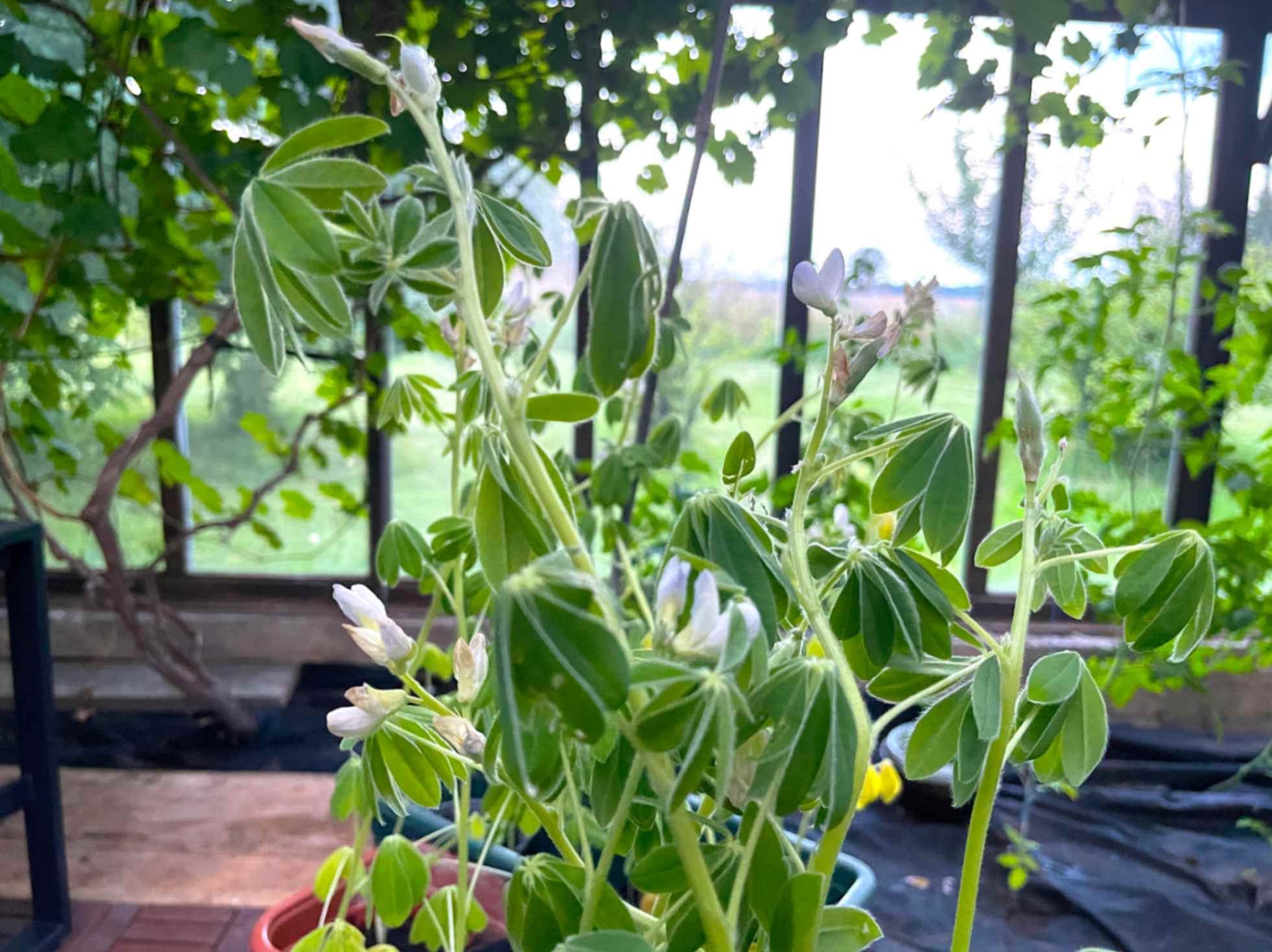
Artistic research Flower as Antenna and Attractor explores how flowering plants sense, respond to, and interpret light — creating their own existence and shaping the worlds they inhabit. Developed within the broader Plants_Intelligence framework, this artistic research by Rasa Smite involves collaboration with plant ecologists, evolutionary scientists, and organic breeding researchers from Switzerland and beyond.
The study follows flowering plants across four perspectives of the flowering plant relationship with light:
The first chapter Chapter 1 – When Flowers First Appeared on Earth traces the evolutionary origins of flowers—using speculative AI, I explored Darwin’s “abominable mystery,” the explosive diversification of flowering plants, focusing on Andean lupins that thrive in extreme altitudes and constant sunlight, suggesting light as a key force in their survival strategies.
The second chapter Chapter 2 – Capacity for Survival: White Lupin Breeding Project examines human–plant coevolution through an ethnographic study of FiBL’s long-term White Lupin breeding project in Switzerland. Here, lupins are reimagined as “light eaters”—growing in open sunlit fields, they embody a quiet cycle: plants that live by consuming light and transforming it into nourishment for others.
The third chapter Chapter 3 – Light Sensing Experiment. Plant Plasticity explores plant intelligence and adaptability—following Katja Tielbörger’s (University of Tübingen) research on plant decision-making, I conducted a Light Sensing Experiment on plant plasticity and their biological responses to changing light conditions.
Finally, the research culminates in the fourth chapter Chapter 4 – Solarceptors: Flowers as Light-Sensing Beings—a poetic VR environment that reveals the profound influence of light on plant existence, reimagining flowers as sensitive light-sensing beings that create their own luminous worlds beyond mere survival.